

Why Holistic Financial Planning Matters Today
Money decisions are more connected than many people think. A choice in one area can affect another area. For example, buying a bigger house may reduce your ability to invest. Taking too much investment risk may affect your retirement comfort. Not having insurance may force your family to sell investments at the wrong time.
That’s why holistic financial planning matters. It gives you a bird’s-eye view. You see the whole map, not just one road.
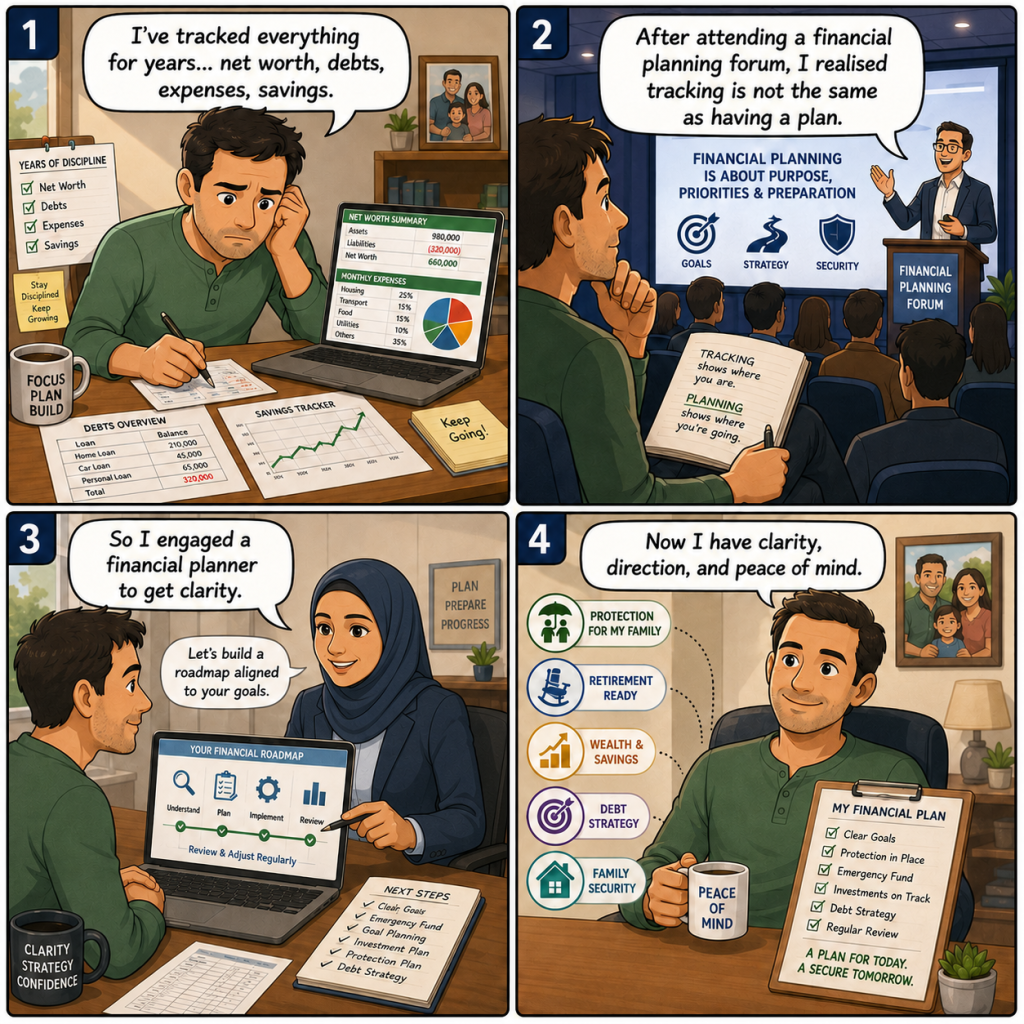
Holistic Financial Planning
Life Goals Come First
A good financial plan starts with life, not products.
Before talking about funds, insurance, taxes, or retirement numbers, you need to know your goals. These may include:
- Buying a home
- Paying for children’s education
- Starting a business
- Supporting parents
- Building passive income
- Retiring comfortably
- Giving to charity
- Leaving wealth for family
Once your goals are clear, your financial decisions become easier. You can say yes to what supports your future and no to what distracts you.
For instance, imagine you want to retire at 55. That goal affects how much you save, how you invest, how you manage debt, and how much insurance you need. It may even affect your career choices. Without a clear goal, you may drift. And let’s be honest, drifting with money can get expensive.
Financial Decisions Are Connected
A complete plan helps you avoid mixed signals. Here’s a simple example.
Suppose you’re investing aggressively but have no emergency fund. If you lose your job, you may need to sell investments during a market downturn. That can lock in losses. In this case, the investment plan looked strong on paper, but the overall financial plan was weak.
Here’s another example. You may have strong savings but no will or nomination planning. If something happens, your family may face delays, disputes, or stress.
Holistic planning reduces these gaps. It helps you ask better questions:
- Do I have enough liquidity?
- Is my debt under control?
- Are my investments suitable?
- Is my family protected?
- Are my retirement assumptions realistic?
- Have I planned for taxes?
- Will my assets be transferred smoothly?
How Professional Standards Support Better Planning
Working with a qualified professional can help, especially when your situation is complex. CFP Board states that CFP® professionals meet education, training, and ethical standards and commit to serving clients’ best interests.
That doesn’t mean every person must hire a planner. However, it does show the value of structured advice. A proper planner doesn’t only ask, “What product do you want?” Instead, they should ask, “What problem are we solving?”
That shift is powerful.
The Powerful 7-Step Holistic Financial Planning Process
Holistic financial planning works best when it follows a clear process. You don’t need to make it complicated. You just need to be honest, organized, and consistent.
Step 1: Clarify Your Life Goals
Start with what matters. Write down your short-term, medium-term, and long-term goals.
| Time Frame | Example Goals |
| 0–2 years | Build emergency fund, clear credit card debt |
| 3–7 years | Buy home, fund education, grow business |
| 8+ years | Retirement, legacy planning, financial freedom |
Be specific. “I want to save more” is too vague. “I want to save RM30,000 in 18 months for a home deposit” is clearer.
Step 2: Understand Your Current Position
Next, review your numbers. This includes income, expenses, debts, assets, insurance, and investments.
Create a simple net worth statement:
| Item | Amount |
| Cash and savings | RM___ |
| Investments | RM___ |
| Property value | RM___ |
| EPF/retirement savings | RM___ |
| Total assets | RM___ |
| Loans and debts | RM___ |
| Net worth | RM___ |
This step can feel uncomfortable, but it’s freeing. Once you know where you stand, you can make better moves.
Step 3: Build an Emergency Fund
An emergency fund gives you breathing room. A common target is three to six months of essential expenses. If your income is unstable, you may want more.
Keep this money somewhere accessible and low risk. It’s not meant to make you rich. It’s meant to keep you safe.
Step 4: Manage Debt Wisely
Not all debt is bad, but unmanaged debt is dangerous. Credit card debt and high-interest personal loans can slow your progress. Housing loans, education loans, or business loans may be useful if managed well.
Focus on:
- Paying high-interest debt first
- Avoiding lifestyle debt
- Keeping monthly commitments manageable
- Refinancing only when it truly helps
- Not borrowing just to look successful
As the saying goes, don’t buy things you don’t need with money you don’t have to impress people who don’t pay your bills.
Step 5: Invest With Purpose
Investing should match your goals. Short-term money should not be placed in highly volatile assets. Long-term money can usually accept more market movement.
A good investment plan considers:
- Time horizon
- Risk tolerance
- Diversification
- Fees
- Tax impact
- Liquidity needs
- Retirement goals
Don’t chase every trend. A boring plan that works is better than an exciting plan that collapses.
Step 6: Protect Your Wealth
Protection is often ignored until it’s too late. Review your life insurance, medical coverage, disability protection, critical illness coverage, and property insurance.
Ask yourself:
- Would my family be okay if my income stopped?
- Can I handle a major medical bill?
- Are my dependents protected?
- Are my business interests covered?
- Are my nominations updated?
Protection planning is not about fear. It’s about responsibility.
Step 7: Review and Adjust
Your plan should not sit in a drawer. Life changes. Markets change. Tax rules change. Family needs change. Review your plan at least once a year or after major life events such as marriage, divorce, birth of a child, job change, property purchase, inheritance, or business changes.
This final step keeps your plan alive.
Key Parts of a Complete Financial Plan
A complete plan is like a well-built house. Each part supports the others. If one part is weak, the whole structure may suffer.
Budgeting and Cash Flow
Your cash flow shows your financial habits. If you spend everything you earn, your income may look good, but your financial future may be fragile.
A healthy cash flow plan includes:
- Fixed expenses
- Flexible expenses
- Savings
- Investments
- Debt payments
- Giving or family support
- Lifestyle spending
The goal isn’t to remove joy. It’s to spend with intention.
Tax Planning
Tax planning helps you keep more of what you earn legally and ethically. This may include using available reliefs, structuring investments wisely, timing income, and keeping proper records.
Tax should not be an afterthought. It affects investment returns, retirement income, business decisions, and estate planning.
Retirement Planning
Retirement planning is not only about reaching a number. It’s about income, lifestyle, healthcare, inflation, and peace of mind.
Ask:
- When do I want to retire?
- How much monthly income will I need?
- What will inflation do to my expenses?
- Will I still have loans?
- How will I pay for healthcare?
- What income sources will I have?
The sooner you start, the less pressure you may feel later.
Insurance Planning
Insurance is the safety net. It protects your plan from major shocks. However, more insurance isn’t always better. The right amount matters.
You should review:
- Life insurance
- Medical insurance
- Critical illness coverage
- Disability income protection
- Home insurance
- Business protection
Insurance should fit your dependents, debts, income, and goals.
Estate Planning
Estate planning helps protect your loved ones from confusion. It may include a will, nominations, trusts, guardianship planning, business succession, and clear records.
Even a simple estate plan is better than no plan. It can save time, reduce stress, and help your family act with clarity.
Common Mistakes to Avoid
Even smart people make financial mistakes. The good news is that many mistakes can be avoided with awareness.
Focusing Only on Investments
Many people think financial planning means investing. It doesn’t. Investment planning is important, but it’s only one part.
A person may have strong investments but poor insurance. Another may have high returns but no estate plan. Someone else may invest monthly but carry expensive debt. These are gaps.
Holistic financial planning helps you see the full picture.
Ignoring Risk Protection
No one likes to think about illness, accidents, or death. Still, risk doesn’t disappear just because we ignore it.
Without protection, your savings may be used for emergencies. Your family may struggle. Your business may suffer. Your retirement may be delayed.
Protection gives your plan strength.
Not Reviewing the Plan
A plan that’s not reviewed becomes outdated. Maybe your income increased. Maybe your goals changed. Maybe you had a child. Maybe your parents now need support. Maybe your investment risk no longer suits your age.
Reviewing keeps your plan relevant. Think of it like servicing a car. You don’t wait for the engine to fail before checking it.
FAQs About Holistic Financial Planning
1. What is holistic financial planning?
Holistic financial planning is a complete approach to managing money. It connects budgeting, savings, investments, insurance, tax, retirement, and estate planning into one clear strategy.
2. Who needs holistic financial planning?
Anyone with income, goals, dependents, debts, assets, or future responsibilities can benefit from it. It’s useful for young professionals, families, business owners, retirees, and high-income earners.
3. Is holistic financial planning only for wealthy people?
No. It’s not only for the wealthy. In fact, people with limited resources may benefit greatly because every ringgit needs a clear purpose.
4. How often should I review my financial plan?
Review your plan at least once a year. You should also review it after major life events such as marriage, childbirth, job changes, property purchases, business changes, or inheritance.
5. What should I prepare before meeting a financial planner?
Prepare your income details, expenses, debts, insurance policies, investment statements, retirement savings, tax information, estate documents, and personal goals.
6. What’s the difference between financial planning and investment advice?
Investment advice focuses mainly on growing money through assets such as funds, stocks, or bonds. Financial planning is broader. It includes investments but also covers cash flow, debt, insurance, tax, retirement, and estate planning.
Conclusion
Holistic financial planning gives you a clear, connected, and practical way to manage your financial life. It helps you stop guessing and start planning. More importantly, it helps your money serve your real goals.
You don’t need to be perfect. You just need to begin. Start by understanding where you are, deciding where you want to go, and building a plan that connects each part of your financial life.
Over time, small actions can create big results. Save consistently. Protect wisely. Invest patiently. Review regularly. With the right plan, your financial future can feel less stressful and more hopeful.
